2025-7-12 14:55 |
Bitcoin has just flown past another all-time-high early on Friday.
That alone would be headline-worthy. But it’s not the number that matters. It’s who is buying, and why.
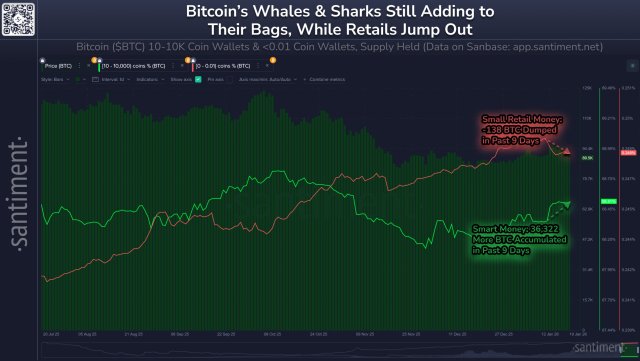
Inflows from institutions, sovereign reserves, and listed companies are fundamentally changing how Bitcoin works.
The people who used to dismiss it are now putting it on their balance sheets. The result is a quieter, more powerful kind of bull market.
An optimistic market that is less driven by hype, and more driven by capital allocation.
This time, it’s not retail euphoria pushing Bitcoin up. It’s the slow, steady weight of serious money. And that changes everything.
A strategic reserve, not just a speculative betIn March 2025, the US government did something no superpower had done before. It officially recognized Bitcoin as part of its strategic reserves.
The move came through an executive order signed by President Donald Trump, creating a Strategic Bitcoin Reserve.
While the reserve is currently funded with seized assets rather than direct purchases, its message is clear: Bitcoin is no longer outside the system. It is now part of it.
This came alongside significant regulatory changes. The GENIUS Act aims to provide clear stablecoin rules. The Clarity Act, currently under review, could define token categories for the first time.
The result is a legal framework that allows institutions to engage without fear of retroactive punishment.
SEC appointments like Paul Atkins and policy advisers like David Sacks have indicated that the US government is ready to move past enforcement as its only crypto strategy.
The impact is already visible. According to Gemini and Glassnode, over 30% of Bitcoin’s circulating supply is now held by centralized entities through ETFs, public companies, exchanges, and sovereign entities. That number has been rising quarter by quarter.
The ETF floodgates are openIf regulation sets the stage, ETFs will become the vehicle. Since the approval of spot Bitcoin ETFs in early 2024, institutional exposure has soared.
As of February 2025, more than 3,300 institutional investors reported holdings in Bitcoin ETFs, up from just 61 a year earlier. This isn’t theoretical adoption. It’s a real shift in how capital allocators are treating Bitcoin.
Source: XBTOIn May alone, spot Bitcoin ETFs saw over $5 billion in inflows.
Trump Media’s own ETF, which allocates 70% of its portfolio to Bitcoin, reflects how normalized the asset has become. According to reports, the US President’s company is filing for a third crypto-ETF this month.
Meanwhile, Grayscale’s GBTC and Canada’s BTCC continue to absorb billions more.
This also matters for liquidity. ETFs reduce the friction of direct ownership. No keys to lose, no exchanges to monitor. It’s Bitcoin exposure with a compliance wrapper.
For pensions, sovereign wealth funds, and conservative asset managers, that makes all the difference.
Companies are now buyers, not observersCorporate treasuries are no longer watching from the sidelines. In Q2 2025, public companies purchased 131,355 BTC, valued at roughly $427 million.
That’s a larger growth rate than ETF holdings for the third quarter in a row.
A total of 267 companies are now holding Bitcoin in their balance sheets, of which 147 are publicly listed.
Source: Bitcoin TreasuriesMicroStrategy remains the largest holder, with 597,000 BTC, now worth over $40 billion. The firm recently raised another $4.5 billion in convertible debt to buy even more.
GameStop, Sequans, and Japan’s Metaplanet have also added Bitcoin to their balance sheets. These are not marketing stunts. They are defensive treasury decisions.
This development has created a new kind of supply crunch. Fewer coins are circulating. More are moving into cold storage.
With only around 2 million BTC still liquid and accessible on exchanges, every new wave of institutional demand tightens the market. That’s already starting to affect price behavior.
Macroeconomics and the new monetary thesisInterest rate policy is helping fuel the fire. The Federal Reserve is now expected to cut rates before the end of 2025.
That creates tailwinds for risk assets, including Bitcoin. But this is about more than just chasing returns. It’s about hedging against fiat uncertainty.
The US dollar is weakening. Inflation may be moderating, but monetary expansion hasn’t stopped.
Bitcoin’s 0.65 correlation to inflation last year was higher than gold. More investors are treating it not as a bet on technology, but as a monetary hedge.
And unlike gold, Bitcoin is liquid, programmable, and politically neutral. It doesn’t sit in vaults. It moves globally.
That makes it more attractive to long-horizon capital such as family offices, sovereign wealth funds, and hedge funds looking for long-duration, non-sovereign assets.
This isn’t a hype cycle. It’s the beginning of a new eraWe’ve seen Bitcoin booms before. The difference this time is who’s buying and what they’re doing with it.
This is not driven by leveraged speculation or meme-driven retail mania. This is led by conservative capital moving into a new asset class.
The numbers back that up. Crypto’s total market cap has reached all-time highs.
Bitcoin alone has absorbed over $1.5 billion in ETF flows this past week. Cumulative spot Bitcoin ETF flows are approaching $50B as of July 2025.
Source: CryptorankCorporations are adding it to balance sheets. Sovereigns are building reserves. Regulations are being written to support, not restrict.
This isn’t a bet anymore. It’s a strategy.
Bitcoin is no longer outsiderBitcoin’s price at an all-time high is not the story. The real story is that the monetary logic behind Bitcoin is now being adopted by the institutions that once rejected it.
Banks, funds, governments, are all starting to treat Bitcoin as a serious piece of the system.
The result is a new kind of stability. Even during volatile days, the floor is higher.
The reflexivity of sovereign and institutional buying is reinforcing itself. Each new buyer reduces liquidity. Each new endorsement increases demand. It’s a feedback loop that doesn’t depend on hype.
That doesn’t mean Bitcoin is without risk. It remains volatile, and policy reversals are always possible. But the structure has changed. And once the structure changes, the price follows.
We are no longer watching Bitcoin fight for legitimacy. We are watching what happens when it finally gets it.
The post The era of institutional Bitcoin adoption has arrived. And this time it's different appeared first on Invezz
origin »Bitcoin price in Telegram @btc_price_every_hour
Bitcoin (BTC) на Currencies.ru


|