2025-11-22 03:00 |
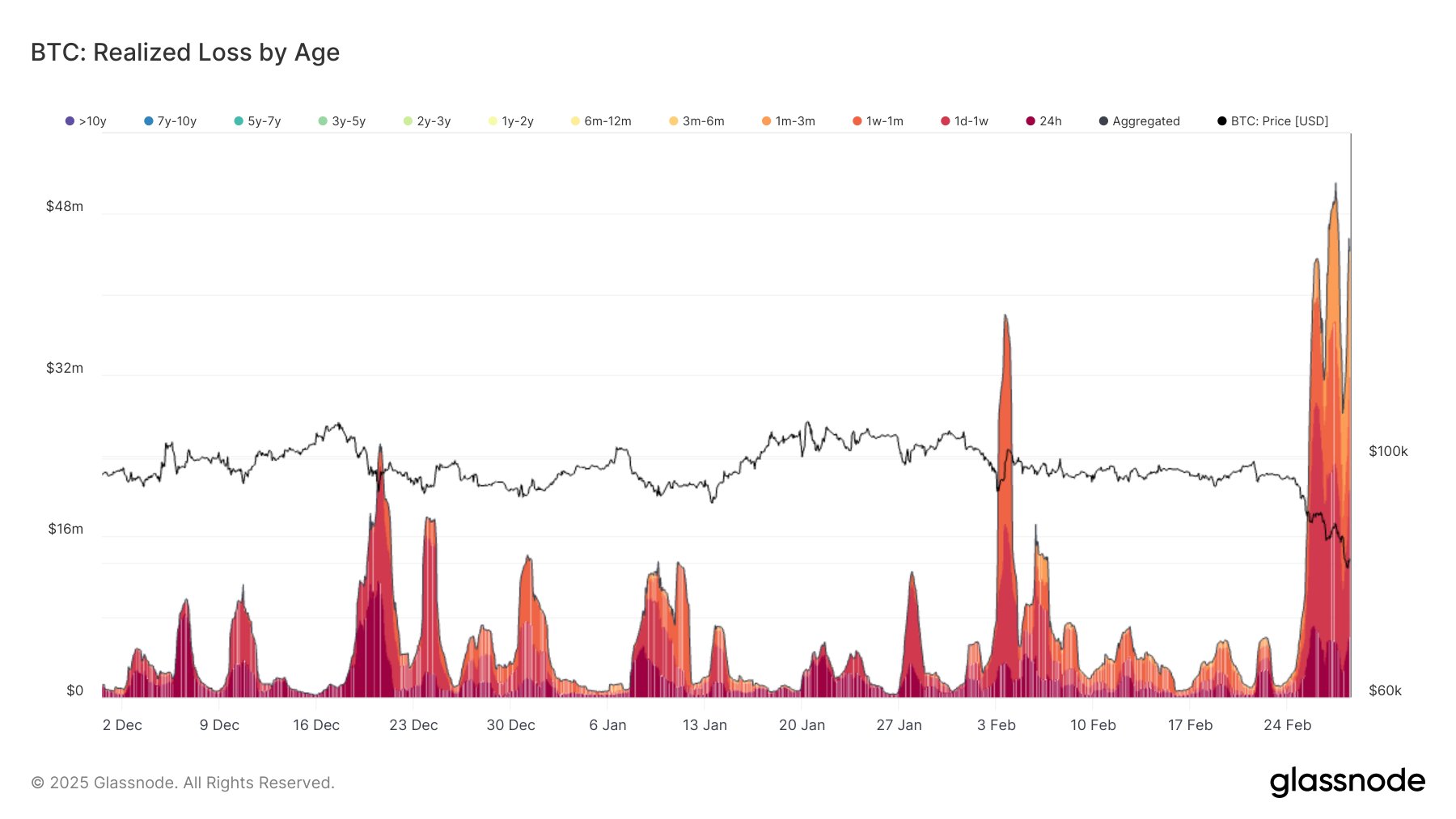
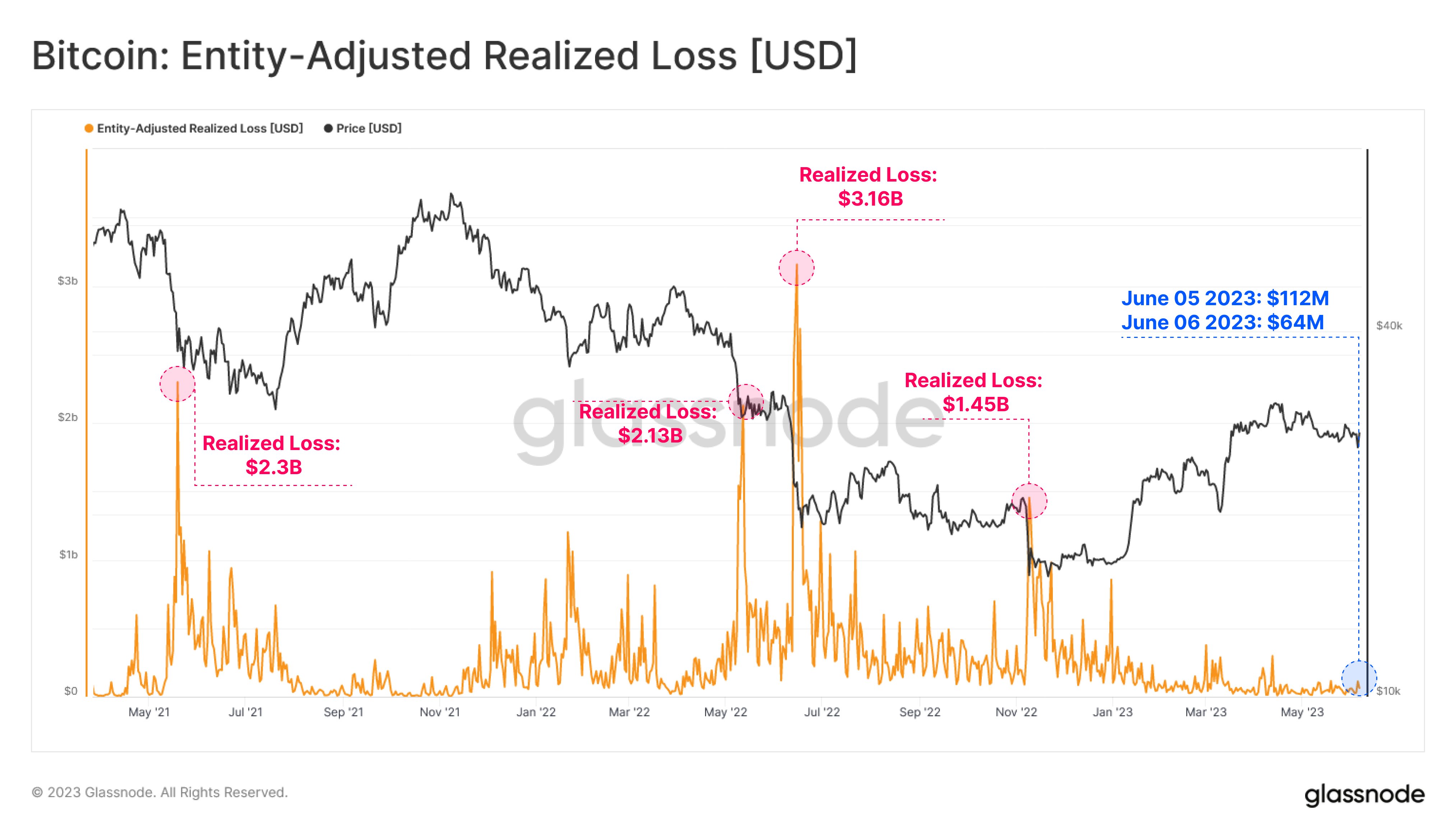
Bitcoin’s recent sell-off has pushed on-chain pain to levels not seen since the collapse of FTX in 2022, with short-term holders blamed for the bulk of the damage, according to analytics firm Glassnode. In a blunt tweet that quickly reverberated across crypto feeds, Glassnode wrote, “BTC realized losses have surged to levels last seen during the FTX collapse, with short-term holders driving the bulk of the capitulation. The scale and speed of these losses reflect a meaningful washout of marginal demand as recent buyers unwind into the drawdown.”
The on-chain numbers are stark. Glassnode-derived figures show roughly 2.8 million BTC now held by short-term holders sitting below their purchase price, the largest concentration of STH losses since November 2022. That means a significant swath of coins bought in the past several months are underwater, and many of those wallets are now taking losses rather than waiting out the pullback.
Those realized losses have translated into real selling pressure across markets. Over the past several weeks, Bitcoin slipped from its October highs and by mid-November had retraced into the low-to-mid $80,000s, marking a six-month low in many venues and wiping out much of 2025’s gains. Analysts have pointed to a mix of drivers: stronger-than-expected economic data that pushed back market hopes for near-term Federal Reserve cuts, a rise in miner and long-holder selling according to exchange flow data, and a broad derisking in risk assets that left Bitcoin vulnerable to cascade moves.
Capitulation ReplayTechnical and on-chain signals suggest the selling has been concentrated and, at times, panicked. Short-term holder SOPR (the Spent Output Profit Ratio for coins moved by recently active addresses) has hovered below 1.0, indicating that many short-term sellers are realizing losses rather than profits, a classic hallmark of capitulation episodes that, historically, can mark local bottoms. Some analysts now argue that this flush of forced sellers could clear the market of marginal demand and set the stage for a steadier base once the selling dries up.
Market experts are divided on timing. On higher timeframes, traders point to the recent breakdown from the $105k–$110k range as a shift in momentum, with the next major support cluster lying near multi-week moving averages in the high-$80k to low-$90k area. Short-lived relief rallies have been met by renewed selling, leaving market structure in a fragile state where news, macro datapoints, or large block sales can quickly swing sentiment. Still, some desks argue that when short-term capitulation finishes, liquidity often re-emerges and healthier trends can resume.
What this means for investors is a cramped, risk-off trading environment where patient holders are being tested and newer entrants face steep unrealized losses. For large, long-term investors and institutions, the drawdown has exposed a broader market reality: even with increasing institutional adoption and spot ETF flows earlier in the year, leverage, correlated risk assets, and market microstructure quirks can amplify corrections.
Glassnode’s broader market notes have highlighted how long-term holder behavior shifted earlier in 2025, with some profit-taking during rallies contributing to liquidity that short-term buyers then absorbed. Despite the pressure, a number of market-watchers remain cautiously optimistic that the current shakeout could be the last serious test before a new leg of accumulation. The logic is straightforward: capitulation removes weak hands, cost-basis concentration shifts, and buyers who can weather volatility can purchase at lower levels.
How quickly that plays out will depend on macro announcements, whether miners continue to sell, and if large-scale buyers, whether treasuries, funds, or whales, step in to buy the dip. For now, traders and observers will be watching on-chain flow metrics and short-term holder behavior closely, as those measures have become the clearest real time indicator of where selling pressure is concentrated and whether the market is nearing the end of this capitulation phase.
origin »Bitcoin price in Telegram @btc_price_every_hour
FintruX Network (FTX) на Currencies.ru


|