2026-2-5 02:40 |
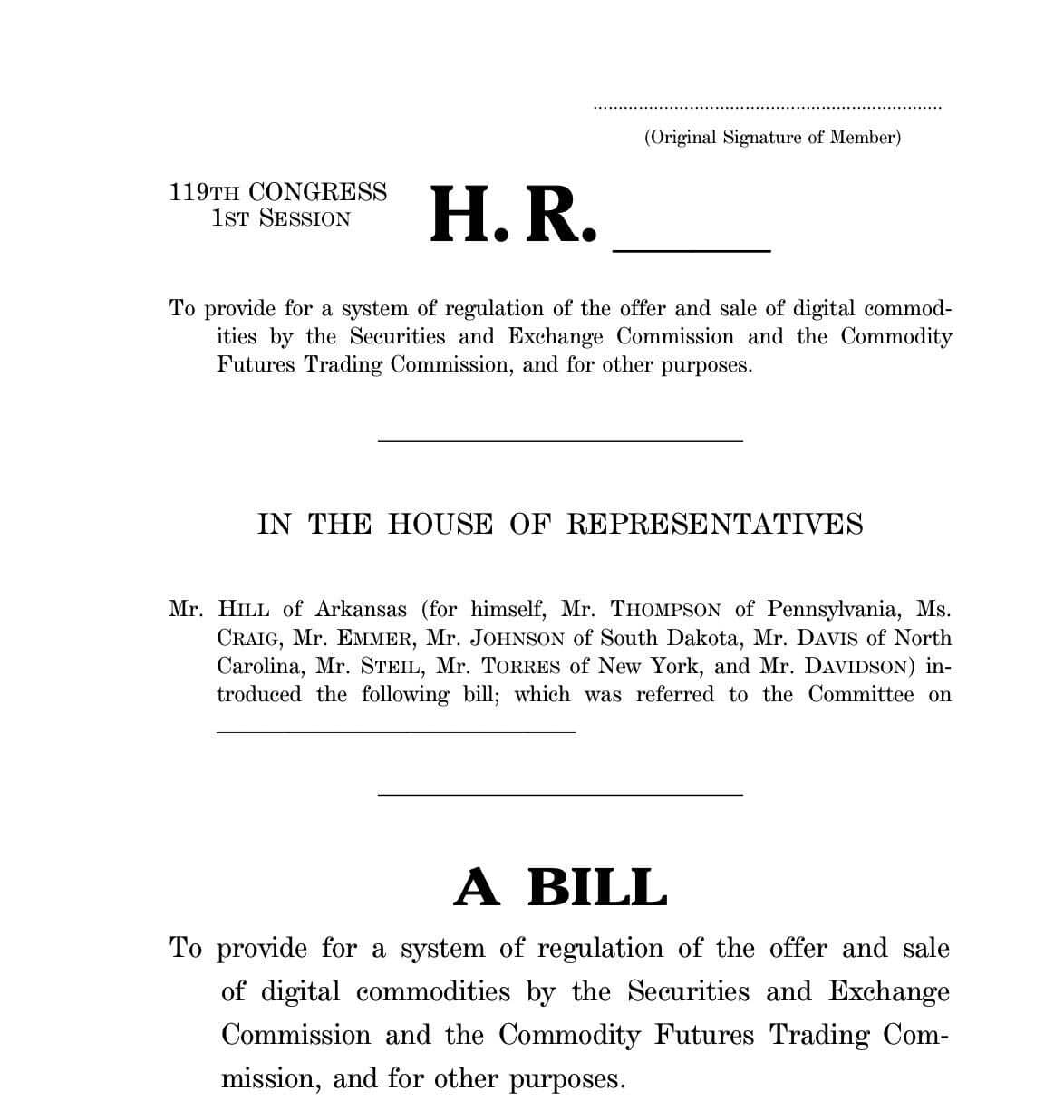
The CLARITY Act debate has largely revolved around the tug-of-war between banks and crypto firms over stablecoin yield. While that conflict dominates coverage of what is framed as a market-structure bill, it obscures a quieter and potentially more consequential issue.
Once enacted, the CLARITY Act would formally legitimize regulated crypto roles and implicitly subject them to Bank Secrecy Act compliance. Even without explicit mandates, this risks entrenching a surveillance-first model that pressures intermediaries to delist privacy assets and abandon privacy-by-design before Congress has openly debated the trade-offs.
Banks Join Talks on Stablecoin YieldOn Monday, industry insiders met with advisors to US President Donald Trump to explore potential compromises in a still-contentious market structure bill.
The discussions were led by Patrick Witt, executive director of the President’s Council of Advisors on Digital Assets. The roundtable included senior figures from both the crypto sector and traditional banking.
Sincere thanks to the representatives from the crypto and banking industries who participated in today’s meeting on stablecoin rewards and yield. The discussion was constructive, fact-based, and, most importantly, solutions-oriented.
Over the course of the past few months, we…
The meeting reignited tensions between the crypto sector and traditional finance.
Critics questioned why policymakers invited Wall Street to help shape legislation governing products that directly compete with its core business. Chief among these are yield-bearing stablecoins, which many view as a direct threat to traditional bank deposits.
However, the meeting also allowed a far subtler, yet equally significant issue to slip largely unnoticed: privacy.
KOLs Question Why Banks are in Discussions Regarding the CLARITY Act How CLARITY Pulls Crypto Under the Bank Secrecy ActThe CLARITY Act presents itself as a market structure framework that promises regulatory certainty for the US crypto industry. It aims to clearly assign activities to regulators and deliver long-sought legal clarity to market participants.
Yet, the bill does more than draw jurisdictional boundaries.
By formally defining regulated crypto roles, particularly for centralized exchanges and stablecoin issuers, it embeds these actors within the existing financial system.
Once those roles are legally recognized, compliance with the Bank Secrecy Act (BSA) becomes effectively unavoidable, even though the legislation does not specify how BSA requirements should apply to on-chain activity.
That lack of specificity hands key decisions to intermediaries, who would set the rules instead of Congress.
CLARITY Act puts banks in charge of crypto rules, risking surveillance-first regulation. Privacy for crypto may vanish without clear debate, say experts pic.twitter.com/ZgZlquHuV7
— BeInCrypto (@beincrypto) February 4, 2026In response, exchanges and custodians default to expansive identity checks, sweeping transaction monitoring, and heightened data collection. In doing so, they establish de facto standards without a clear legislative mandate.
Within this framework, privacy-focused projects stand to bear the greatest cost.
Privacy Assets in the Line of FireThe BSA requires financial institutions to verify customer identities and monitor for suspicious activity. In practice, this means knowing who customers are and reporting specific red flags to authorities.
What the law does not require is constant, system-wide transparency or the ability to trace every transaction back to an identity at all times.
Nonetheless, major crypto firms such as Binance, Coinbase, and Circle already operate as if it does. They equate BSA compliance with maximum on-chain visibility in order to minimize regulatory risk amid legal uncertainty.
This approach translates into strict traceability requirements and the avoidance of protocols that limit transaction visibility. Centralized exchanges typically refuse to list privacy-focused cryptocurrencies like Monero or Zcash, not because the BSA explicitly demands it, but as a precautionary measure.
The CLARITY Act needs to be stopped. Not tweaked, not modified, completely stopped.
It is how you will “own nothing” – through the tokenization of all of your assets.
You will be impacted by this even if you don’t have crypto. Every thing you buy and sell will be on a…
As it stands, the CLARITY Act does not account for how the BSA should apply to blockchain systems where privacy and pseudonymity operate differently from traditional finance. That silence matters.
By leaving key obligations undefined, the CLARITY Act risks entrenching the most conservative, surveillance-heavy interpretation of the BSA as the default.
As a result, participants aligned with crypto’s cypherpunk roots are likely to be most affected, as privacy-oriented tools and services face the greatest restrictions.
The post A White House Tweet Exposed the Real Risk in the CLARITY Act appeared first on BeInCrypto.
origin »Bitcoin price in Telegram @btc_price_every_hour
Achain (ACT) на Currencies.ru


|