2026-7-21 04:00 |
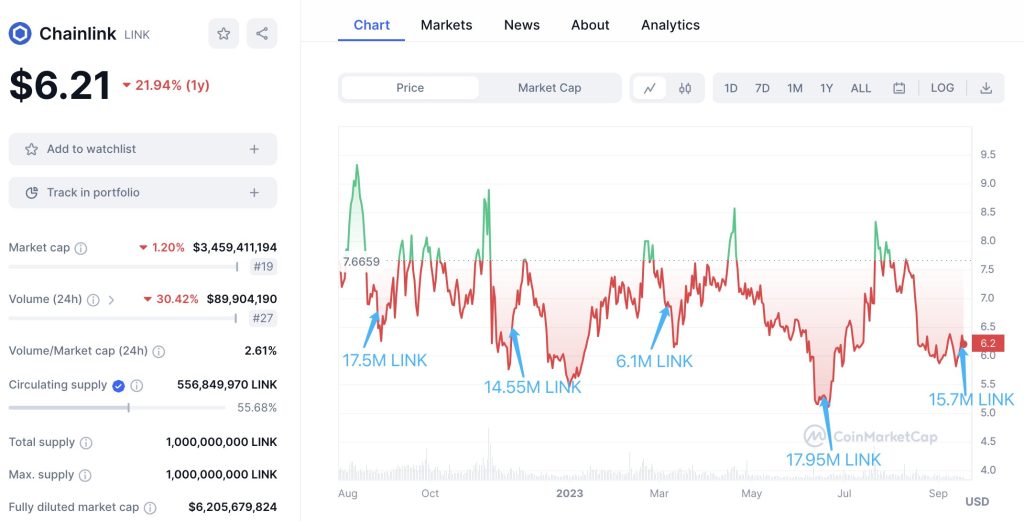
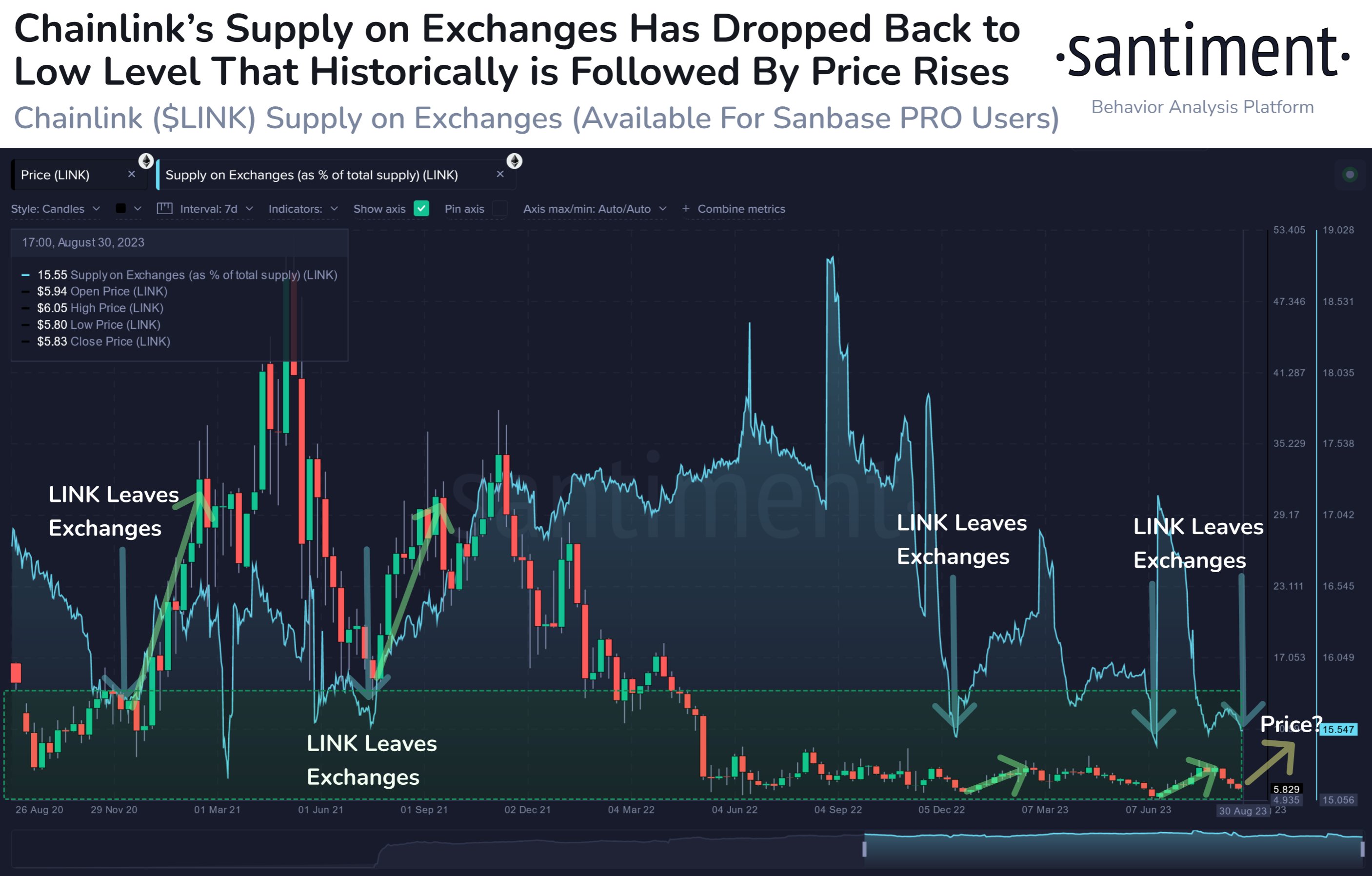
LINK’s exchange balance is shrinking at a pace that matters far more for market structure than for short-term price oscillators. According to the latest Santiment update, more than 15.7 million LINK—roughly 12% of the known exchange supply—left trading platforms over the past month. Sunday alone saw net outflows of 1.04 million tokens, one of the largest single-day moves during the entire stretch. That kind of draining of readily sellable supply resets the supply-demand dynamic in a tangible way.
Fewer tokens sitting on order books mean aggressive sellers either have to chase prices higher or wait for a repositioning that may not come soon. The signal isn’t just about bullish positioning; it’s about the rationale behind the movement. These outflows didn’t follow a price surge or a hype cycle—they stacked up during a month packed with institutional-grade catalysts that reframe how oracle infrastructure gets valued. The DTCC processed production trades using tokenized US securities, a milestone that arrived as the tokenization market crossed live settlement milestones with trades between major institutions. Chainlink was listed among the technology providers involved, and CCIP expanded to the Canton Network, linking that permissioned ecosystem to Ethereum.
In parallel, ADI Predictstreet—the official prediction market partner of the 2026 FIFA World Cup—adopted Chainlink as its exclusive oracle infrastructure for market resolution and instant payouts. That pulls demand visibility into mid-2026, when the World Cup could draw real user volume from far outside crypto-native circles. With interoperability architectures becoming more concrete, as seen in developments like decentralized computing partnerships that power active Web3 applications, the need for reliable oracle networks connecting off-chain data to on-chain execution grows less theoretical by the month.
What the Exchange Outflow Signal Actually SaysA 12% monthly drop in known exchange supply is not a gentle rotation; it is a structural change in available float. When tokens move off exchanges in large clips without an obvious speculative trigger, the simpler explanation is that participants are moving them for reasons other than selling. Whether that involves staking, cold storage, or direct custody for institutional use cases, the effect is the same: the tokens sitting on venues that facilitate liquid exits keep getting scarcer. In the context of a build-up in real-world tokenization ties and cross-chain oracle adoption, the outflow pattern looks more like positioning around utility expansion than a temporary sentiment swing.
The Overhang Nobody Is Talking AboutStill, several pieces remain unconfirmed. It is not clear what proportion of the outflows went to custody-only wallets versus smart contracts tied to DeFi deployments, and whether those tokens would return quickly if a new fear event hits. Prediction market demand—while promising—is also lumpy, and June’s adoption does not yet guarantee sustained fee generation during the tournament. On the regulatory side, tokenized securities are still in a fragile zone, and any reversal in policy could chill the very infrastructure plays that Chainlink is betting on. The supply contraction is real, but the market is still pricing in a utility ramp that hasn’t fully materialized yet. That gap between off-exchange accumulation and live protocol revenue is where the next move will be decided.
origin »Bitcoin price in Telegram @btc_price_every_hour
Supply Shock (M1) на Currencies.ru


|