2026-8-8 23:45 |
Bitcoin climbed back above $65,000 this week, extending an unusual stretch of resilience as the cryptocurrency absorbed a string of developments that would typically pressure prices.
The top digital asset rose about 2% over the past 24 hours to as high as $65,212, its strongest level since late July, CryptoSlate data shows.
The move coincided with $191.6 million in crypto liquidations across more than 80,000 traders, CoinGlass data showed, including a $1.66 million BTC position on Hyperliquid.
The price performance came as investors digested a major hardware-wallet security breach, another delay to the landmark CLARITY Act legislation and months of stagnant price action that have left some holders selling at losses.
Yet none of those pressures has produced the kind of sustained liquidation that accompanied Bitcoin’s sharper declines earlier this year.
Andre Dragosch, head of research at Bitwise Europe, said Bitcoin’s muted reaction to negative developments has pushed its sensitivity to bad news close to historical lows, which he views as a sign that much of the market’s readily available supply has already been sold.
Bitcoin Sensitivity to Bad News (Source: Bitwise) Loss-taking fades as sellers lose urgencyBitcoin holders are still realizing losses, but the intensity of that selling has fallen considerably from the capitulation episodes that accelerated previous declines.
CryptoQuant data shows Bitcoin’s weekly average net realized profit and loss remains negative at about $368 million, meaning investors are collectively selling some coins below their acquisition prices.
However, that remains far below the roughly $2 billion in net realized losses recorded during a February decline and the approximately $1.2 billion seen during another bout of capitulation in June.
The difference suggests holders are still being worn down by months of weak price action, but without the concentrated rush toward the exits that previously overwhelmed available demand and drove sharper declines.
The Coldcard security breach provided another test of that dynamic.
The vulnerability, linked to weak randomness used in generating wallet seed phrases, forced owners of potentially affected devices to move previously dormant Bitcoin into new addresses after the incident emerged around July 30.
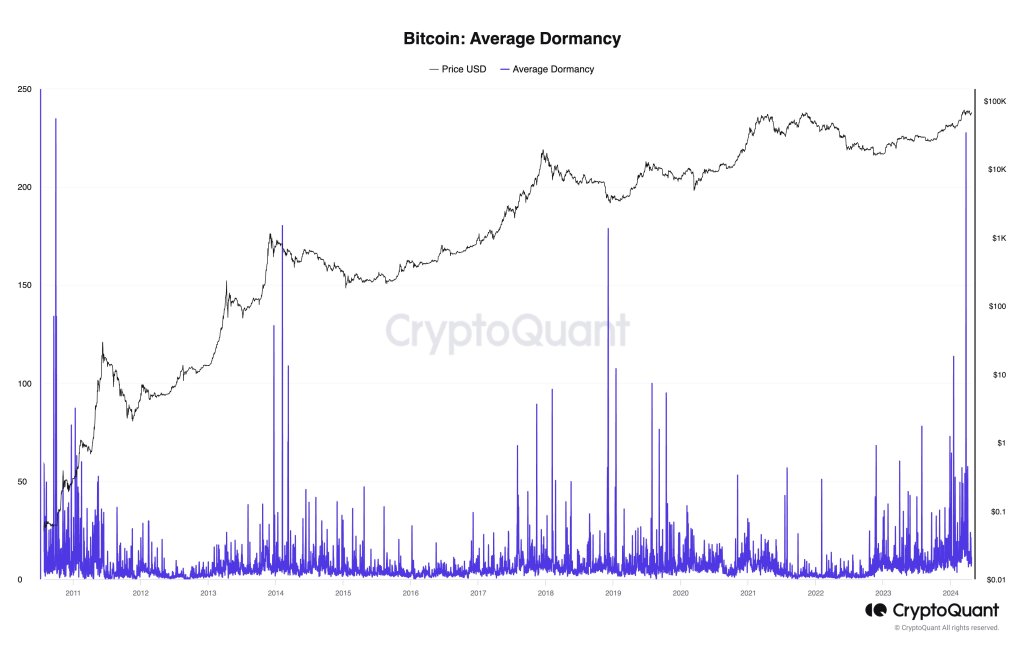
The resulting spike in blockchain activity initially carried the risk of releasing a large amount of dormant supply into the market.
Instead, much of the movement appears to have involved holders securing their assets rather than preparing to sell them.
Glassnode estimated that roughly 119,000 BTC held for at least a year moved during the three days following the initial incident. Only a fraction of those coins reached exchanges, limiting the amount of additional supply available for immediate sale.
That distinction helps explain why an event that threatened confidence in one of Bitcoin’s most established forms of self-custody failed to translate into comparable pressure in the spot market.
ETFs and whales absorb Bitcoin as smaller holders retreatThe decline in selling intensity is increasingly being met by fresh demand, with US spot Bitcoin ETFs pulling in hundreds of millions of dollars while larger wallets accumulate coins being shed by smaller holders.
Data from SoSoValue shows that US-listed spot Bitcoin ETFs have attracted about $754.7 million this week, putting the products on pace for their strongest weekly inflow since April.
The recovery follows a prolonged period of uneven demand as Bitcoin struggled to regain momentum through the summer.
Bitcoin ETFs Holding (Source: CryptoQuant)However, the current inflows are particularly important as they show that Bitcoin’s largest institutional demand channels continued drawing capital through a security scare that might otherwise have weakened appetite for the asset.
At the same time, large BTC holders have also been accumulating directly on-chain under these conditions.
Santiment data shows wallets holding between 10 BTC and 10,000 BTC have added more than 20,000 Bitcoin since July 29 while smaller wallets reduced their balances.
Those purchases are worth more than $1.2 billion based on Bitcoin’s trading range during the period.
Bitcoin Whales Accumulation (Source: Santiment)Together, the ETF flows and wallet data suggest Bitcoin’s current consolidation is facilitating a transfer of supply.
Smaller holders frustrated by months of stagnant prices are reducing exposure while investors with larger balance sheets increasingly take the other side.
Derivatives traders remain reluctant to chase the rallySantiment sees the accumulation by larger holders as improving Bitcoin’s odds of eventually breaking above $70,000 rather than falling below $60,000.
However, the derivatives markets are showing little conviction that such a move is imminent.
Data from Glassnode shows BTC upside implied volatility has fallen to about 23%, the lowest level in its data. This indicates traders are paying unusually little for contracts that would benefit from a sharp rally.
Bitcoin Upside Volatility (Source: Glassnode)Demand for downside protection is also relatively restrained. That leaves options positioning looking defensive largely because expectations for a large upside move have faded, rather than because traders are aggressively preparing for another selloff.
CME Bitcoin futures positioning points to a similarly cautious market.
CryptoQuant data shows leveraged funds remain heavily net short, with their positioning near the upper end of its three-year historical range. Asset managers are still net long, but their exposure has fallen substantially from its 2024 peak and remains below its 50-week average.
Bitcoin CME Futures Positioning (Source: CryptoQuant)The gap creates the potential for an asymmetric move if Bitcoin strengthens enough to force short covering.
However, participation has also weakened. Open interest, the number of reporting traders, and the share of positions held by reportable participants are near or below typical levels, suggesting the extreme positioning is concentrated among fewer market participants.
Still, leveraged-fund shorts cannot be read entirely as outright bearish bets. Such positions frequently form part of basis trades, ETF hedges and other relative-value strategies, while CFTC classifications do not reveal the economic purpose behind individual positions.
That makes the current setup less conclusive than the size of the short position alone might suggest.
A stronger breakout signal would likely require Bitcoin to rise alongside expanding open interest and broader futures participation, while leveraged funds begin covering their shorts. Further declines in asset-manager exposure would instead reinforce signs that institutional conviction remains weak.
For now, spot and derivatives markets are sending different signals. Smaller holders are selling with less intensity while ETFs and larger wallets absorb available supply, helping Bitcoin withstand negative headlines. Futures and options traders, however, are still showing little willingness to bet heavily on what comes next.
That makes Bitcoin increasingly difficult to push lower, although the market has yet to establish the demand needed to drive a sustained move higher.
The post Bitcoin’s $65K recovery shows its growing immunity to bad news as ETFs and whales buy $2 billion appeared first on CryptoSlate.
origin »Bitcoin price in Telegram @btc_price_every_hour
Bitcoin (BTC) на Currencies.ru


|