2022-5-9 16:00 |
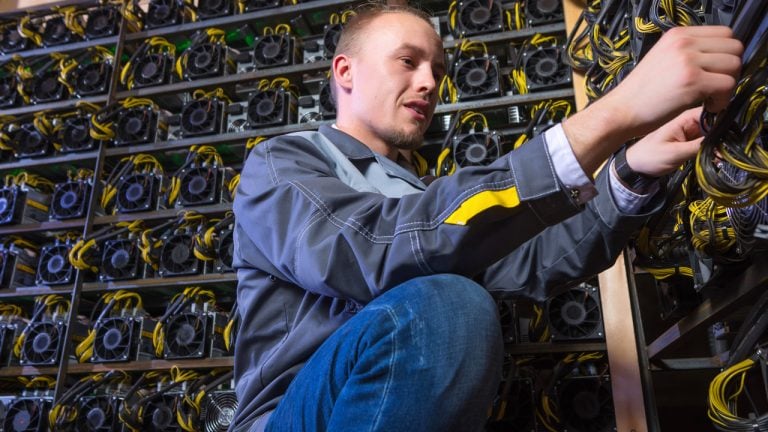
Bitcoin mining has the potential to revolutionize our approach to electricity generation by allowing power production to increase with buyers of last resort.
In its 12 years of existence, Bitcoin’s mainstream reputation has ranged from quirky internet money to baseless speculative investment to — for some — the ultimate store of value. Amid the various narratives surrounding Bitcoin, one critique seems to have never left its side: Bitcoin’s energy consumption is dangerously wasteful.
Sensational headlines have convinced the unsuspecting citizen that Bitcoin is incompatible with the environmentally conscious narrative. A look beyond first-order effects, however, reveals that Bitcoin may ironically be the key to a future of abundant, clean energy because it foundationally changes the energy industry’s incentive structure by acting as a market-aligned demand response capability and de facto insurance product. By aligning the interests of the environmentally conscious with those of investors and electricity providers, bitcoin mining serves as the long-awaited intermediary between emission reduction and profitability. By embracing bitcoin mining as a natural subsidy for electricity generation, nations around the world can set in motion an unprecedented wave of innovation in the energy sector and advantageously position themselves for a future of dramatically increased demand for electricity.
Before discussing the oft-ignored merits of bitcoin mining, we must first address the common misconception that energy consumption is inherently immoral. In fact, our use of energy is fundamental to life as we know it. A future without an expansion of our energy consumption is a future devoid of continued human flourishing and technological progress. All human advancement depends on our unique ability to channel the universe’s energy for useful purposes. Humanity’s remarkable ingenuity is a direct consequence of its capacity to harness increasing amounts of energy from its environment and direct it for useful purposes. A call to limit or reduce total energy consumption is, therefore, a call to slow or reverse our long history of quality-of-life improvement.
The question for serious environmentalists has never been and never should be a matter of gross electricity consumption, but a matter of the costs and benefits of generating that electricity. Popular arguments proclaiming that bitcoin mining uses “too much energy” are fundamentally flawed because they usually fail to distinguish between the sources of Bitcoin’s energy consumption and rarely explore the utility exchanged for such consumption. To remain intellectually honest, we must avoid the poorly researched allegations common in superficial critiques of bitcoin mining and genuinely consider the potential benefits of embracing this novel technology as more than just a speculative investment, among which include its dramatic impact on our approach to electricity generation.
Today, sources of renewable energy, such as wind and solar, cannot reliably constitute a majority share of U.S. electricity supply because modern battery storage of electricity en masse is prohibitively expensive and, without a major technological breakthrough, unsustainable. Consequently, most electricity must be used at or near the time of generation, or else it goes to waste. This limitation lies at the heart of the modern grid: Electricity providers can find themselves bouncing between the two extremes of failing to generate enough electricity to meet demand (load) and wastefully producing surplus supply.
This model promotes a fragile system. To be profitable, operators must perpetually adjust how much electricity to produce by continuously monitoring and predicting consumer demand, exposing them to supply deficits and surpluses when the grid experiences unexpected changes in load. In these scenarios, operators often find themselves wastefully generating unused excess electricity or, worse, failing to meet the needs of the grid. Areas overly dependent on renewable energy sources experience the additional uncertainty of supply intermittencies, often subjecting their constituents to brownouts, blackouts and counterproductive energy reduction policies. Renewable-reliant Europe’s reopening of coal-fired plants amid skyrocketing natural gas prices following Russia’s incursion into Ukraine demonstrates just how counterproductive this approach can be.
Bitcoin mining has the potential to revolutionize the way we approach electricity generation. As Square (now Block Inc.) and ARK Invest pointed out in their April 2021 memo, bitcoin miners can function as buyers of last resort for otherwise-expiring surplus electricity. In other words, bitcoin mining offers an unquenchable, elastic demand floor, profitable secondary revenue stream and de facto insurance product for electricity suppliers. This radically shifts the provider incentive structure. Whereas electricity providers’ primary objective today is to limit electricity production to expected load, bitcoin miners’ unappeasable demand for electricity removes the uncertainty associated with variable supply and demand by incentivizing providers to instead maximize production at the cheapest variable cost.
This new paradigm profoundly changes the dynamics of the grid as we know it because it eliminates the penalty associated with generating too much electricity and naturally encourages providers to expand their operations beyond the threshold of peak load. In effect, bitcoin mining can help to resolve the modern grid’s most pressing issues and challenges. By creating artificial demand, bitcoin mining can help resolve our grid’s most notorious variable and distributed generation interoperability problems, such as the heightened prices associated with excess solar generation and having to pay suppliers to turn off their wind turbines. Rather than focusing efforts on precisely matching real-time load, providers subsidized by bitcoin mining are free to generate as much affordable electricity as possible and monetize the excess by selling it to dependably hungry miners. While the limited, unpredictable demand of the grid once stood as a tall barrier to carbon-neutral and stranded energy ventures, bitcoin miners can serve as a conduit for clean and remote energy development because they guarantee an unlimited, predictable demand for cheap electricity.
Historically, developing excessive renewable infrastructure would have been financially irresponsible and wasteful. When subsidized by bitcoin mining, however, low variable costs and near-unlimited supply make renewable projects more attractive investments. Bitcoin mining can uniquely resolve the issues caused by renewables’ sporadic nature and out-of-phase generation because it can boost revenues when electricity supply exceeds demand — such as when windmills generate excess electricity at night — while simultaneously mitigating concerns of failing to meet unexpected escalation to peak load. In effect, bitcoin mining guarantees renewable projects and their investors profitability and can drive further investment. Assuming a future of dramatically increased dependence on electricity, the supplementary grid capacity afforded by renewables will prove central to supporting continued improvement in our way of life and can encourage further development of new, more productive ways to harness renewable forces.
Although bitcoin mining can potentially increase renewable investments’ profitability and minimize their negative impacts on the grid, their ever-present susceptibility to unpredictable outages cannot be depended upon to provide consistent baseload power, especially in an increasingly electrified world. Moreover, some argue that opportunity costs associated with renewables — such as land-use requirements, durability, wildlife concerns and the high costs of transmission infrastructure — can make renewable projects less attractive in the long run. As the source of energy with the highest capacity factor, nuclear power, is often considered the most reliable form of electricity generation. Despite accounting for 20% of the U.S.’ total electricity generation and 50% of its emissionless generation, nuclear energy is often dismissed because of misconceptions about safety and high startup costs. Because of its demanding initial capital requirements, the opportunity costs of producing unused surplus electricity with nuclear power are high. Additionally, nuclear plant operators tend to prefer continuously operating at full power because of the impracticalities of scaling back to meet depressed demand. These characteristics have generally confined nuclear power generation to the task of steadily supplying nothing beyond baseload levels of electricity. Bitcoin mining challenges this model by making it profitable for nuclear power plants to generate surplus electricity, removing a principal constraint on their ability to scale beyond producing baseload power and making possible a future grid almost entirely dependent on affordable, emissionless electricity.
The U.S. Energy Information Administration projects that the world’s demand for electricity will increase by 50% over the next 30 years. Today, it is clearer than ever that keeping pace with that demand will require tremendous generation capacity. The tangible effects of an overbuilt, bitcoin-subsidized grid are cheap, stable prices and enhanced demand response flexibility. In their pursuit of generating surplus supply, providers’ ordinary electricity production levels will far exceed those of peak load, creating supply- and price-stabilizing effects on the grid by establishing an elastic buffer between electricity supply and demand. This will prove useful in reducing grid congestion when demand for electricity spikes in emergency situations: While it can take hours or more to ramp up power plants, it takes minutes to turn off bitcoin miners and rapidly redirect electricity to those in need, as we saw in Texas earlier in 2022.
As our world transitions to one characterized by ubiquitous electrification, demand for electricity is expected to push the limits of our ability to reliably produce it, especially in the case of a persistent global environmental movement. Bitcoin mining can cleanly and profitably secure our future electricity needs by acting as a global, free-market subsidy to an expanding grid infrastructure. Yes, bitcoin mining consumes a lot of electricity. So do electric vehicles, refrigerators, data centers and other hallmarks of human progress. In an environment of intense political division, bitcoin mining offers a market-aligned, politically agnostic solution to the highly politicized global energy debate. It uniquely resolves the tensions that have formed between investors and operators seeking sustainable returns and the environmentally conscious seeking to limit carbon emissions. Regardless of where one stands on the matter of “green” energy, we can nearly all agree that a world of abundant electricity is better than one of scarce electricity. By rewarding, rather than punishing, surplus electricity generation, bitcoin mining emphasizes abundance over scarcity and unlocks opportunities to scale electricity production far beyond the daily needs of consumers, promoting a more robust, reliable, and affordable grid. When left to its own devices, Bitcoin is our best chance for a future of abundant, clean energy.
This is a guest post by Drew Borinstein. Opinions expressed are entirely their own and do not necessarily reflect those of BTC Inc. or Bitcoin Magazine.
origin »Bitcoin price in Telegram @btc_price_every_hour
Bitcoin (BTC) на Currencies.ru


|