2022-8-9 21:31 |
Key Takeaways The cost of mining one bitcoin is down to $13,000, from $24,000 at the start of June Conversely, electricity costs around the globe are rising, with the European Power Benchmark highlighting this – up 281% in Q1 compared to the same quarter last year This means miners’ costs (electricity) are rising and their revenue (Bitcoin) is flailing Miners are hence fleeing the network As miners close up shop, the difficulty of mining falls – it is now at a 5 month low – explaining why the cost to mine one bitcoin is down Lower mining difficulty reduces security of the network, as it means attackers need fewer resources to manipulate and take control of the system Lower resources required to validate transactions also favour small-scale miners, allowing them to compete better with larger miners
Last month, JP Morgan published a report outlining the cost of mining one bitcoin had fallen to $13,000 – a steep 46% decline from the start of June, when one bitcoin cost $24,000 to mine.
But how is this true, when the geopolitical climate is causing electricity prices to rise, in line with inflation seen across the board?
Electricity costs are risingThe European Power Benchmark averaged 201 €/MWh in the first quarter of 2022 – up 281% compared to the same quarter in 2021.
Spain and Portugal jumped 411%, while prices in France rose 336%. Italy was not far behind, up 318% and now the highest price in the EU at €249 per MWh.
This means the operational costs to mine Bitcoin are rising, hurting miners and causing many to close up shop.
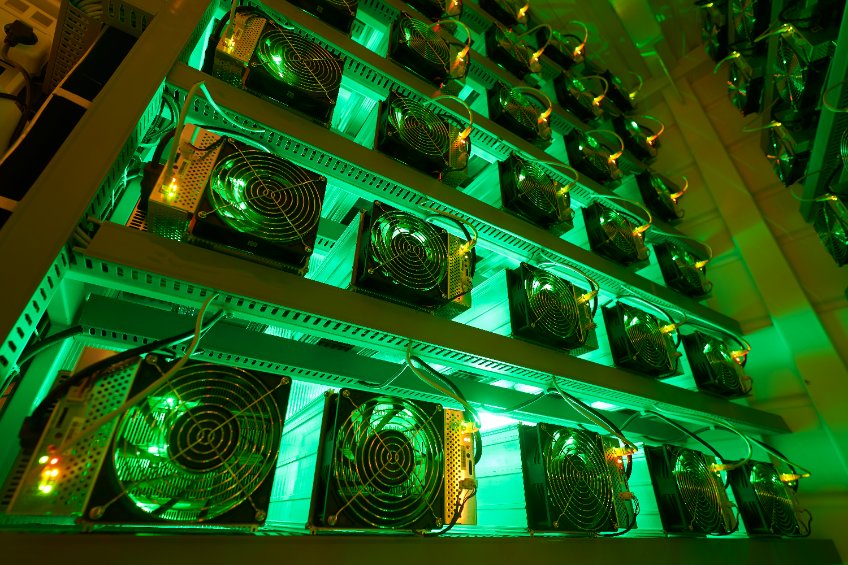
MiningThis is where it gets interesting. To give a super quick explanation of mining, Bitcoin miners seek to solve a complex mathematical puzzle.
Whichever miner solves the puzzle first wins the right to “validate” that block of the blockchain, and hence receives a reward in bitcoin. The block is added to the blockchain and then the process repeats, with miners competing on the next mathematical puzzle for the next block.
The amazing thing is that Bitcoin’s mysterious creator, Satoshi Nakamoto, coded an adjustment mechanism into Bitcoin. This means that as more miners join the network and compete to solve the mathematical puzzles, the puzzles become more difficult. In such a way, the blockchain ticks along as is meant to, targeting the same average blocks per hour.
In fact, Satoshi’s quote below from the Bitcoin whitepaper highlights that he anticipated computers getting more powerful and interest in mining spiking over time:
“To compensate for increasing hardware speed and varying interest in running nodes over time, the proof-of-work difficulty is determined by a moving average targeting an average number of blocks per hour. If they’re generated too fast, the difficulty increases”.
What it means todayThis rise in the price of electricity combined with a fall in the price of Bitcoin is the worst possible thing to happen to miners. Their costs (electricity) are rising, while their revenue (Bitcoin) is simultaneously falling.
And they are closing up shop.
The below graph shows the mining difficulty of the network.
It’s clear miners are feeling the squeeze, along with the rest of the market. The average difficulty has hit its lowest level since March. This is generally viewed as a negative for the Bitcoin network as a whole as it reduces the security of the blockchain.
The higher the cryptocurrency difficulty, the more processing power is needed to verify the transactions, and the higher the complexity. In this case, attackers need more resources to manipulate and take control of the system.
A second possible consequence is that lower mining difficulty could be good news for small-scale Bitcoin miners. This is because it enables transactions to be confirmed using fewer resources, allowing the little guy to compete with larger miners.
If electricity costs continue to rise and Bitcoin lags at its current level (or drops further), this won’t be changing anytime soon. On the flip side, if Bitcoin rallies, we may see more miners dust off their equipment to get back in the game, with the difficulty rising back up as a result.
SourcesJP Morgan / Decrypt
Europa.eu
IntoTheBlock
The post Bitcoin mining difficulty hits 5-month low as miners close up shop appeared first on CoinJournal.
origin »Bitcoin price in Telegram @btc_price_every_hour
Bitcoin (BTC) на Currencies.ru


|