2026-6-7 00:00 |
The researcher who helped surface a severe soundness flaw in Zcash’s Orchard privacy pool isn’t slowing down. Taylor Hornby, the security engineer who used Anthropic’s Claude Opus 4.8 AI model to find the vulnerability, confirmed he will add Monero and other privacy-focused cryptocurrencies to his upcoming audit queue, according to the original report. The sequence shifts focus from a single bug fix to a broader campaign examining the soundness of privacy coin architecture.
Commissioned by non-profit developer Shielded Labs, Hornby identified a defect hidden in Zcash’s Orchard shielded pool since May 2022. That long dormancy matters. It suggests even well-audited privacy layers can carry latent risks that only surface under new analytical pressure—or, in this case, when a large language model is pointed at the codebase with targeted prompts. Zcash allocated over $80,000 from its dev fund to fix the issue, but the incident alone doesn’t give a full account of what AI-assisted security screening can do to privacy protocol market dynamics.
A Hidden Vulnerability EmergesThe Zcash bug was not an academic exercise. Shielded pools underpin the entire privacy model for ZEC—a flaw in their soundness could theoretically let someone create counterfeit shielded notes, undermining the pool’s integrity. For a coin that trades on its privacy guarantees, a structural weakness is a material market event. While the bug was patched before exploitation was publicly recorded, the disclosure timeline raised the temperature for every privacy protocol watching from the sidelines.
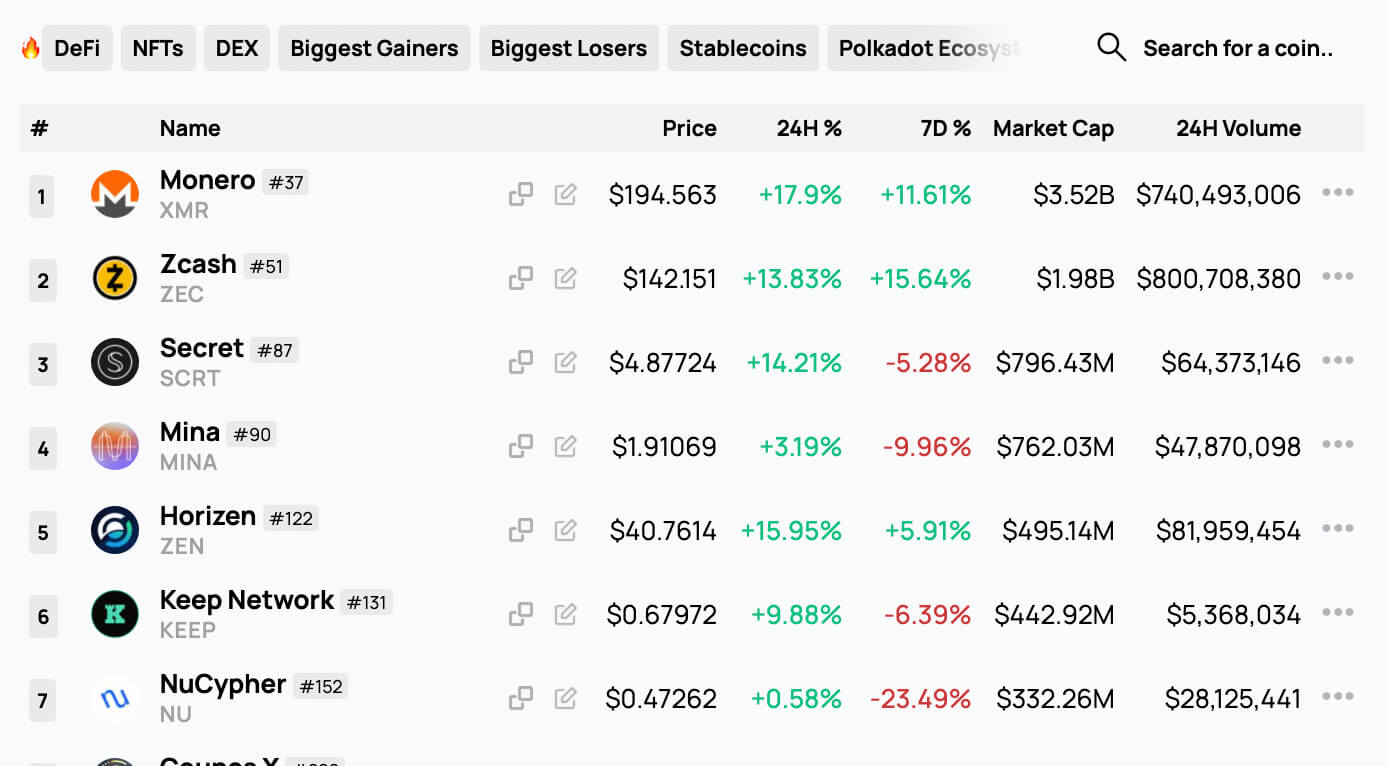
The developer community responded quickly, but trust in shielded transactions isn’t restored overnight. Zcash’s market performance during the period tells a mixed story. ZEC recently ranked among the top weekly crypto gainers despite the disclosure, suggesting that price action did not fully price in protocol risk—or that traders are betting on a swift recovery in confidence. The disconnect between infrastructure fragility and spot price momentum is a familiar pattern in privacy coin markets, one that Hornby’s upcoming audits may test again.
AI Meets Crypto AuditingUsing an enterprise-grade AI model for vulnerability hunting moves the conversation away from theory and into production security. Hornby’s workflow with Claude Opus 4.8 signals that AI-assisted auditing can surface bugs that survived years of manual review. That’s not a replacement for human auditors—it’s a force multiplier. For protocols with massive codebases and complex zero-knowledge circuitry, the tooling matters as much as the talent. The broader crypto sector is already seeing AI integration outside trading, from AI-driven Web3 application infrastructure to on-chain analytics. Adding security research to that list is a logical, if overdue, step.
The Monero community has long prided itself on robust privacy defaults, but fewer outsiders have subjected its code to this type of LLM-assisted adversarial review. Hornby’s intent to screen XMR and similar coins changes the equilibrium. It doesn’t guarantee a discovery—Monero’s ring signatures and stealth addressing differ fundamentally from Zcash’s shielded pool model—but it places Monero under the same spotlight that just exposed a multi-year Zcash flaw.
What the Monero Audit Could MeanMonero’s market narrative has been shaped largely by regulatory delistings rather than protocol-level vulnerabilities. An audit that turns up nothing would reinforce the project’s defensive claims. A finding, even a minor one, would reframe the story around code risk. Either outcome carries weight. The privacy coin sector is already under pressure from exchanges reducing support and from proposals like the GENIUS Act that scrutinize anonymity-enhanced transactions. A security revelation would add a new dimension to that debate, pitting protocol integrity against policy headwinds.
There’s also a timing element. Developer activity across top blockchains remains concentrated among a few ecosystems, as shown in recent dev activity rankings. Privacy coins often sit outside those top-tier contenders, so concentrated security scrutiny can either surface as a reputation boost or a credibility blow. Hornby’s audit queue represents a form of concentrated attention—something the privacy sector gets rarely and unevenly.
The unknowns are substantial. A queue does not equate to findings, and a clean Monero audit wouldn’t make headlines the way a critical bug would. Hornby’s timeline isn’t public, and the results will be parsed by a market that often reacts to privacy coin news with disproportionate volatility. While ZEC managed to hold its price ground after the Orchard bug, the pattern may not repeat for XMR if new flaws emerge. The market’s selective tolerance for protocol risk is, itself, a variable to watch.
What’s clear is that the AI-assisted audit model is no longer a one-off experiment. As privacy coin maintainers digest the Zcash incident and prepare for similar scrutiny, the entire segment faces a quiet but consequential stress test. The researcher who got the ball rolling now has other coins in his sights.
origin »Bitcoin price in Telegram @btc_price_every_hour
Zcash (ZEC) на Currencies.ru


|